1980 · 1995 · 2026
Quebec’s 1980 and 1995 Referendums
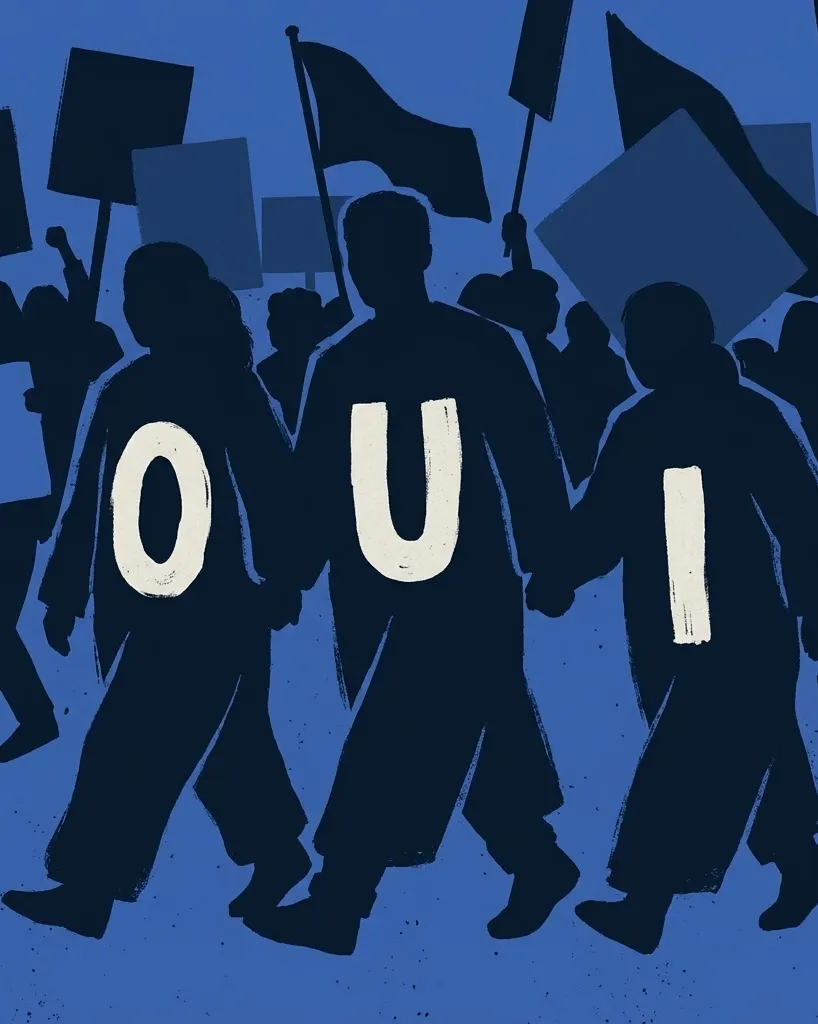
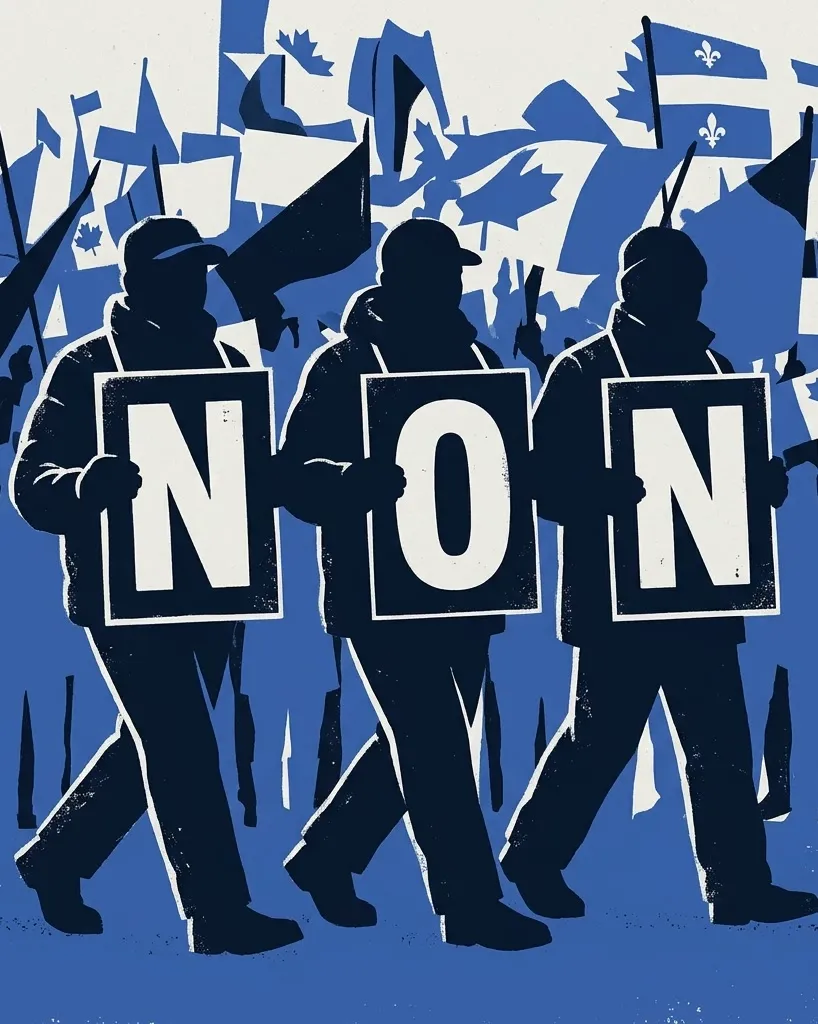
In 1980, 59.56% of valid votes said No. In 1995, 50.58% did. This page tells what happened, using the official figures, and then what could come next. Every fact names its source.
In brief
Quebec is a Canadian province. Sovereigntists want it to become an independent country. Federalists want it to stay in Canada.1
Quebecers have voted on sovereignty twice. No won in 1980, and again in 1995 with 50.58% of valid votes.2
In Quebec, a referendum is consultative. The result does not bind the government by law.3
In the 5 October 2026 election, the Parti Québécois won the most seats, five short of a majority.4
The 1995 margin
54,288
That is the number of votes separating No from Yes on October 30, 1995, out of 4,671,008 valid ballots. Voter turnout reached 93.52%.
Words and landmarks
The essentials
New to the subject? Each fact names its source.
Key words
- Sovereignty, independenceSouveraineté, indépendance
Both words describe a Quebec that would be a country. The Parti Québécois’s Livre bleu says independence means having a complete state. The Bloc Québécois, which runs in federal elections, calls itself “indépendantiste”. In 1980 the Quebec Liberal Party wrote that the Parti Québécois project was “synonyme de souveraineté, d’indépendance, de séparation politique” (synonymous with sovereignty, independence, political separation).5
- FederalismFédéralisme
Lawmaking is split between a central Parliament and the provinces, as in Canada. The Quebec Liberal Party says it supports Canadian federalism.6
- ReferendumRéférendum
A vote where electors give their opinion on a question or a bill. Quebec has held four province-wide votes, two on sovereignty.7
- Separatist, sovereigntistSéparatiste, souverainiste
A Canadian English dictionary says both words name the same thing, but the choice shows a political side. Independence activist Marcel Chaput titled his essay “Pourquoi je suis séparatiste”. This page says “sovereigntist”.8
- Bill 101, Charter of the French languageLoi 101, Charte de la langue française
A 1977 law. The Quebec government says it makes French Quebec’s only official language.9
Landmarks
1760 Sep 08
At Montréal, the French sign their surrender to the British. The Quebec government dates the Conquest to this year.10
1976 Nov 15
The Parti Québécois wins an election for the first time.11
1980 May 20
First referendum on sovereignty. No wins with 59.56% of valid votes.12
1981 Nov 05
1981 Dec 01The federal government and nine provinces agree on a plan to bring the Constitution home from Britain. Quebec’s government does not sign. On 1 December, the National Assembly says it cannot accept the plan without four conditions.13
1990 Jun 23
The Meech Lake Accord, which would have recognized Quebec as a distinct society within Canada, expires without every province’s approval.14
1995 Oct 30
Second referendum. No wins by 54,288 votes.15
1998 Aug 20
2000 Jun 29The Supreme Court of Canada gives its opinion on Quebec secession. The federal Clarity Act follows.16
2006 Nov 27
The House of Commons recognizes that the Québécois form a nation within a united Canada.17
Quebec in Canada
Quebec by the numbers
- Ontario16.3M
- Quebec9.1M
- British Columbia5.7M
- Alberta5.1M
- Manitoba1.5M
- Saskatchewan1.3M
- Nova Scotia1.1M
- Others1.8M
Estimates for 1 July 2026. “Others” groups Newfoundland and Labrador, Prince Edward Island, New Brunswick and the three territories.18
19.8%of Canada’s GDP
- Quebec 19.8%
- Ontario 38.5%
- Alberta 15.2%
- British Columbia 13.8%
- Others 12.6%
Gross domestic product at current prices, 2024. “Others” groups the six other provinces, the three territories and GDP attributed outside Canada.19
- Nunavut1,836,994 km²
- Quebec1,298,600 km²
- N.W.T.1,127,712 km²
- B.C.920,687 km²
- Ontario892,412 km²
- Alberta634,658 km²
- Sask.577,060 km²
- Manitoba540,310 km²
- Yukon472,345 km²
- N.L.358,170 km²
- N.B.71,249 km²
- N.S.52,825 km²
- P.E.I.5,681 km²
Land only, water excluded. Quebec is the largest province. Nunavut, a territory, is larger.20
- Alberta$97k
- Sask.$91k
- N.L.$77k
- B.C.$76k
- Canada$76k
- Ontario$74k
- Quebec$69k
- Manitoba$65k
- P.E.I.$61k
- N.S.$60k
- N.B.$56k
Provinces only. 2024 GDP divided by the population on 1 July 2024. Canada includes the territories.21
- Quebec$11,372
- Sask.$10,334
- N.L.$9,683
- Ontario$9,656
- Canada$9,577
- B.C.$9,510
- N.S.$9,252
- P.E.I.$9,113
- N.B.$8,186
- Manitoba$7,637
- Alberta$6,920
Provincial governments only, not municipal or federal taxes, 2024. Quebec’s figure leaves out the federal tax abatement ($7.5 billion), since other provinces receive the equivalent as federal transfers. With it, Quebec is at $12,212. The Canada row groups all provinces and territories, on the same basis.22
New immigrants (permanent residents admitted) 1980 to 2025, as a three-year moving average. The dots mark the referendums. At the 2021 Census, 14.6% of Quebecers were immigrants, against 23.0% across Canada.23
Origins
Where the question comes from
Eight moments, from 1763 to 1976, that explain where the debate comes from.
Eight landmarks
1763
A treaty ends the war between Britain and France, and France cedes Canada. In 1774, the Quebec Act restores French civil law and lets Catholics practise their religion.24
1837 to
1838Some Patriotes in Lower Canada take up arms for a government that answers to the elected assembly. British troops defeat them.25
1840
Lord Durham, the British governor and high commissioner, proposes uniting Upper and Lower Canada, in part to assimilate French Canadians into English-speaking culture. Britain unites them into one province in 1840.26
1867
Canada becomes a federation. Quebec becomes a province, with its own government and legislature.27
1960
Jean Lesage’s Liberals win the election. A period of fast change begins, now called the Quiet Revolution.28
1968
René Lévesque and others found the Parti Québécois. It seeks a sovereign French-speaking state and offers the rest of Canada an economic association. The RIN, an independence movement started in 1960, disbands and asks its members to join the new party.29
1970
The FLQ wants Quebec’s independence and a socialist state. Since it was formed in 1963, it has carried out bomb attacks. It kidnaps British diplomat James Cross, then Quebec minister Pierre Laporte. The Quebec government asks Ottawa for emergency powers, and the City of Montreal asks for every kind of help. Ottawa invokes the War Measures Act. Pierre Laporte is later found dead.30
1976
The Parti Québécois wins the election after promising a referendum on sovereignty.31
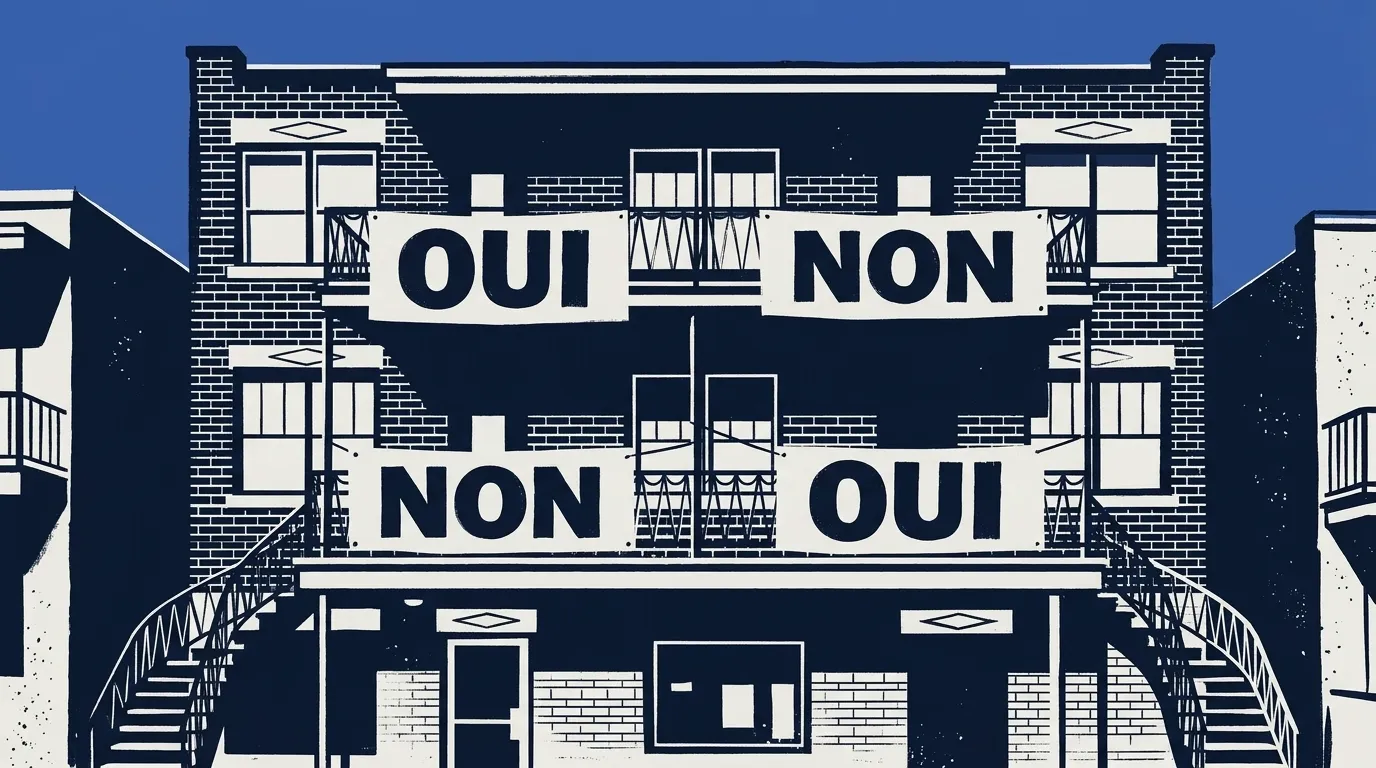
The two questions
1980
The Government of Québec has made public its proposal to negotiate a new agreement with the rest of Canada, based on the equality of nations; this agreement would enable Québec to acquire the exclusive power to make its laws, levy its taxes and establish relations abroad – in other words, sovereignty – and at the same time, to maintain with Canada an economic association including a common currency; no change in political status resulting from these negotiations will be effected without approval by the people through another referendum; on these terms, do you give the Government of Québec the mandate to negotiate the proposed agreement between Québec and Canada?
Official text, Élections Québec.
1995
Do you agree that Québec should become sovereign, after having formally offered Canada a new economic and political partnership under the bill respecting the future of Québec and the agreement signed on June 12, 1995?
Official English text, Élections Québec.
The official results
| Results of the 1980 and 1995 referendums | May 20, 1980 | October 30, 1995 |
|---|---|---|
| Registered electors | 4,367,584 | 5,087,009 |
| Yes | 1,485,851 (40.44%) | 2,308,360 (49.42%) |
| No | 2,187,991 (59.56%) | 2,362,648 (50.58%) |
| Majority for No | 702,140 | 54,288 |
| Rejected ballots | 65,012 | 86,501 |
| Voter turnout | 85.61% | 93.52% |
Percentages are calculated on valid ballots. Élections Québec prints the No percentages. The Yes percentages are calculated from its vote counts and match the figures published by the National Assembly’s library and the Library of Parliament.
The first time
1980 Mar 20
The National Assembly adopts the question proposed by Premier René Lévesque, by 68 votes to 37. An amendment from Rodrigue Biron, member for Lotbinière, rewords the question’s third paragraph to state that no change in political status would be made without the approval of the people in another referendum.
1980 Apr 15
The writs are issued. The Yes committee is chaired by Lévesque and the No committee by Claude Ryan, leader of the Quebec Liberal Party.
1980 May 20
No wins in 95 of the 110 electoral divisions and Yes in 15. At the Paul Sauvé Arena on the night of the vote, Lévesque tells the crowd, according to National Film Board archives, “à la prochaine fois” (until next time).
1981 Apr 13
The Parti Québécois is returned to power with 80 of 122 seats.
The close vote
1995 Jun 12
The leaders of the Parti Québécois, the Bloc Québécois and the Action démocratique sign an agreement on how the referendum will proceed.
1995 Sep 07
The government tables Bill 1, the bill respecting the future of Québec, and makes the question public. The bill is never adopted.
1995 Oct 01
The writ is issued.
1995 Oct 27
A large rally for the No side takes place in downtown Montréal. According to Élections Québec, tens of thousands of people take part, many of them from outside Québec.
1995 Oct 30
No wins with 50.58% of the vote. In the riding of Vimont, Yes had won by 6 votes, 24,548 to 24,542.
After the vote
In all, 86,501 ballots were rejected, or 1.82% of votes cast. The Chief Electoral Officer investigated three ridings where the rejection rate was abnormally high, Chomedey (11.61%), Marguerite-Bourgeoys (5.50%) and Laurier-Dorion (3.60%). He found that 29 deputy returning officers, out of 22,431, had unreasonably rejected valid ballots, and that two official delegates of the Yes committee had helped or encouraged them during their training. He found no province-wide conspiracy.
The Chief Electoral Officer brought proceedings against 31 people. The first two were acquitted for lack of fraudulent intent, and the other proceedings were abandoned.
A separate inquiry found that individuals and organizations, some from outside Québec, had paid for or discounted transportation to the October 27 rally in breach of the law. It found the No committee was not directly involved. Twenty statements of offence were abandoned in 1997 after the Supreme Court’s Libman decision.
Another inquiry, published in 2007 (the Grenier report), looked at Option Canada. Élections Québec summarizes its conclusion as follows. Expenses of about $539,000 by Option Canada and the Council for Canadian Unity were illegal because the official agent of either side had not authorized or declared them, and some other illegal expenses could not be evaluated. The report states that its conclusions are not a penal or civil judgment.
The movement
The project, for and against
What sovereigntists want, what federalists answer, and why the question comes back.
What the movement wants
1980
The question asks for a mandate to negotiate sovereignty-association, meaning a sovereign Quebec in economic association with Canada.32
1995
The question is about sovereignty “after having formally offered Canada a new economic and political partnership.”33
2026
The Parti Québécois’s Livre bleu says it will not propose sovereignty-association. It aims for a full state, an “État complet” (complete state), and a referendum during its term, with 50% of votes cast plus one needed to win. Québec solidaire would start with a constituent assembly. For the Bloc Québécois, a partnership is highly desirable but not a precondition.34
For and against
For
For the PQ’s Livre bleu (2026), the Canadian system is “irréformable” (beyond reform), and without independence the status quo “signifie en réalité le déclin” (in fact means decline). The book holds that the Constitution Act, 1982 fails “tant sur la méthode que sur le résultat” (on both method and result). The PQ wants economic powers in the hands of one state answerable to Quebecers.35
Against
In 2017, Philippe Couillard’s Liberal government writes “Nous sommes Québécois, et c’est notre façon d’être Canadiens” (we are Quebecers, and that is our way of being Canadian). In 1997, federal minister Stéphane Dion writes that democracies usually require a consensus for serious, almost irreversible changes. In 2026, Liberal leader Charles Milliard said his party does “not want to separate Quebec, we want to fix Quebec.”36
Why the question comes back
Identity and risk
Political scientist Paul Howe (1998) suggests that national identity weighs more than views on the economy or language, which may often be rationalizations. For Richard Nadeau, Pierre Martin and André Blais (1999), attitude to risk had “a modest but significant impact” on how people voted in 1995. Harold Clarke, Allan Kornberg and Marianne Stewart (2004) dispute this model.37
Turning points
In polls, support for sovereignty peaked at 58% in 1990, after the Meech Lake Accord failed. In 2002, the National Assembly reaffirmed that it never adhered to the Constitution Act, 1982. In 2017, Quebec’s Liberal government wrote that the scale of the changes made by the 1982 Charter would have justified getting Quebec’s consent first.38
Today
From 4 to 6 September 2026, Léger measured 27% for sovereignty, 62% against and 11% undecided. With the undecided shared out, it was 30% for and 70% against.39
Elsewhere
Other separations
Six other places voted or legislated on leaving a union.
At a glance
| Case | Decided by | Outcome |
|---|---|---|
| Norway and Sweden, 1905 | Parliament, then men-only vote | 368,208 to 184 |
| Czechoslovakia, 1992 to 1993 | Federal law | Two states |
| Montenegro, 2006 | Referendum, 55% bar | 55.50% Yes |
| Scotland, 2014 | Agreed referendum | 44.70% Yes |
| Brexit, 2016 to 2020 | Act of Parliament | Leave won |
| Catalonia, 2017 | Referendum, law suspended | 90.18% Yes on 43.03% turnout (Catalan government) |
Yes shares are of valid votes. Turnout is the share of eligible voters who voted.40
Norway and Sweden
Why
Norway and Sweden shared a king, who refused a Norwegian law.41
When
1905.42
How
Norway’s parliament declared his rule over. Sweden said Norway could not end the union alone, and asked it to consult its people. Norwegian men approved the break almost unanimously, and talks settled the terms.43
Difference
Fossum and Haglund (2006), two academics, note that Norway already governed itself, and that the split came close to armed conflict.44
Czechoslovakia
Why
After the 1992 elections, Czech and Slovak leaders could not agree.45
When
1992 to 1993.46
How
There was no referendum, though most people polled wanted one. The federal parliament ended the federation.47
Difference
Fossum and Haglund (2006) write that in 1995 sovereigntists pointed to this peaceful split, and those who feared a split to Bosnia’s war.48
Montenegro
Why
Montenegro’s union with Serbia let a member leave.49
When
2006.50
How
Talks under an EU envoy set a 55 per cent bar for Yes. Yes cleared it, and the pro-union side contested the result.51
Difference
The Venice Commission cited Canada’s Supreme Court, which left political actors to judge a clear majority.52
Scotland
Why
The Scottish Government sought independence. The UK Government agreed to a referendum.53
When
2012 to 2014.54
How
Yes planned to keep the pound in a currency union. The UK Government said the three largest UK parties ruled out that union. No won.55
Difference
André Lecours (2014), a scholar, points to the two governments’ deal on the rules. Quebec’s main parties reserve such rules for the National Assembly.56
Brexit
Why
Stronger In said the UK was safer in. Vote Leave wanted laws made by people voters elect.57
When
2016 to 2020.58
How
Leave won, and the UK left in 2020.59
Difference
Aileen McHarg (2025), a constitutional lawyer, calls leaving the EU one-sided. In Canada, she notes, Parliament judges whether a result is clear, and Quebec’s law sets a simple majority.60
Catalonia
Why
Catalonia’s Parliament called its people sovereign and said dialogue with Spain was exhausted.61
When
2017.62
How
Spain’s Constitutional Court suspended the referendum law, but the vote went ahead. After a declaration of independence, nine people were sentenced to prison. An amnesty law followed. In 2025 the Court upheld most of it and extended it to acts opposing independence.63
Difference
The defence held up Canada as a model. The Spanish Supreme Court saw no similarity between the history of Quebec’s claims and the defendants’ one-sided act.64
If it happened
The practical questions
Money, trade, passports, the flag, territory, debt. Here is what each actor proposed, answered or decided.
Money
The PQ, 2026
The Parti Québécois’s Livre bleu proposes a Quebec currency in the medium term. The Canadian dollar would stay through a 10-year transition. A commission of experts would then recommend going ahead or extending the transition.65
In 1995
Jacques Parizeau, premier of Quebec, said keeping the Canadian dollar needed no one’s permission. Paul Martin, federal finance minister, answered that “there will be no further monetary union” after separation.66
In 2025
Mélanie Joly, federal industry minister, said a Quebec currency would cut buying power. Yves-François Blanchet, leader of the Bloc Québécois, suggested she was leaning on fear.67
Trade
The PQ, 2026
The PQ would no longer propose sovereignty-association, but a treaty of free trade and free movement with Canada. Quebec’s entry into the North American agreement would have to be negotiated, “s’il existe encore” (if it still exists).68
In 1995
Jacques Parizeau said international trade deals protected Quebec from a possible bad mood among its neighbours. Jean Chrétien said “By leaving Canada, Quebec would be leaving NAFTA,” and would have to try to negotiate admission as a new country.69
Passports
The PQ, 2026
Quebec would allow dual citizenship. Quebecers could keep their Canadian passport and renew it on Canada’s terms.70
In 1995
Jean Chrétien, prime minister of Canada, presented a No as the guarantee of “Canadian citizenship, Canadian passports and the Canadian dollar.”71
The law
The Citizenship Act says a citizen stops being one only in the cases it sets out. Parliament sets those rules.72
The flag and the anthem
The PQ, 2026
The fleurdelisé would be confirmed as the country’s official emblem. A national anthem would be chosen by popular consultation, and the Fête nationale would become Independence Day.73
Today
The fleurdelisé is already Quebec’s national emblem, under a 1999 Quebec law. “O Canada” is Canada’s national anthem, under a federal law.74
Territory
The PQ, 2026
Quebec would keep its current borders. The Livre bleu calls partition a “bonhomme Sept-Heures”, a bogeyman.75
Ottawa, 1995
In October 1995, Ron Irwin, federal minister of Indian Affairs, said Quebec’s Indigenous peoples had the right to stay in Canada with their territories.76
The Cree, 1995
On 24 October 1995, the James Bay Cree held their own referendum. 96.3% voted to stay with Canada, on a turnout of 77%.77
Ottawa, 2000
The Clarity Act requires secession talks to deal with borders and with the rights and territorial claims of Indigenous peoples.78
Debt
The PQ, 2026
Sharing the federal debt “n’est pas automatique” (is not automatic) and would be negotiated. Without a deal, Quebec would keep only the debt it took on itself.79
Supreme Court, 1998
The Court noted that after more than a century “there is a national economy and a national debt,” and that secession would raise questions of great complexity.80
October 5, 2026
And now?
The Parti Québécois won 59 of 127 ridings with 28.02% of the vote. It is five seats short of a majority, set at 64. Voter turnout was 66.92%.
Seats in the National Assembly after the October 5, 2026 election
- Parti Québécois 59 seats
- Parti libéral du Québec 40 seats
- Parti conservateur du Québec 19 seats
- Québec solidaire 9 seats
- Coalition avenir Québec 0 seats
These figures come from Élections Québec’s open data files, last updated as final results on October 8. In Vachon, the gap between the top two candidates was 10 votes. The PQ said on October 7 that it was requesting a recount (Canadian Press). The outcome has not yet been checked.
What the Parti Québécois leader has said
- According to the Canadian Press, the PQ said its January 2026 convention would adopt a platform including a commitment to hold a referendum during a first mandate.
- On August 18, 2026, Paul St-Pierre Plamondon said a Parti Québécois government would not hold a referendum while Donald Trump is president of the United States, meaning not before January 20, 2029 (CTV News).
- In an interview with the Canadian Press published September 11, 2026, he said the referendum would take place in 2029 or 2030 and cost at least $130 million (Noovo Info).
The other parties’ positions
- Parti libéral du QuébecCharles Milliard says the Liberals are the only ones who can, “realistically”, block the referendum project (Noovo Info, October 6, 2026, translated from the French “de façon réaliste, bloquer le projet de référendum”).
- Parti conservateur du QuébecAccording to the Canadian Press, Éric Duhaime has pledged to stop a referendum from being held.
- Québec solidaireLeader Ruba Ghazal said the party would be in the Yes camp in an eventual referendum, but declined to say what it would do if the government pursued a referendum expected to lose (Noovo Info, October 6, 2026).
The PQ holds 59 of 127 seats and the other parties together hold 68.
Sources and method
The 1980 and 1995 results come from Élections Québec’s official pages. The March 20, 1980 debate comes from the National Assembly’s Journal des débats. The social data come from Statistics Canada, the Institut de la statistique du Québec and Immigration, Refugees and Citizenship Canada. The 1998 opinion comes from the Supreme Court of Canada. The 2026 results come from Élections Québec’s open data files, and the political statements from the Canadian Press, CTV News and Noovo Info. Dates and documents are recorded in a verification file that is kept up to date.
Contains open data granted under the Chief Electoral Officer’s Open Data User Licence available at http://dgeq.org/en/. The fact of granting the licence in no way implies that the Chief Electoral Officer approves the use made of the open data.
This page is an independent, non-partisan project. It has no connection with Élections Québec, the Government of Québec, any political party or any referendum committee.
Facts last checked 2026 Oct 14.
Annex
Notes, bibliography and glossary
Each note links back to the passage it supports. The bibliography lists every cited document once. The glossary gives a plain definition of terms used in this guide.
Notes
- 1.Constitution Act, 1867, s. 5; This page’s editorial rule, see Sources and method. ↩︎
- 2.Élections Québec, 1980; Élections Québec, 1995. ↩︎
- 3.Chief Electoral Officer, study, 3rd ed., ss. 1.2, 4.1.1 and 4.3.1; Reference re Secession of Quebec, 1998, para. 87. ↩︎
- 4.Élections Québec, open data, final results, updated 8 October 2026; Canadian Press, 6 October 2026. ↩︎
- 5.Parti Québécois, Livre bleu, p. 60; Bloc Québécois, 2023 statutes; Beige Paper, La Presse, 10 January 1980, p. 3. ↩︎
- 6.Library of Parliament, HillNotes, 18 July 2022; Quebec Liberal Party, values. ↩︎
- 7.Chief Electoral Officer, study, 3rd ed., ss. 3.1, 4.1.1 and 5.2. ↩︎
- 8.Dictionary of Canadianisms on Historical Principles, “sovereignist”; Livre bleu, p. ii; This page’s editorial rule, see Sources and method. ↩︎
- 9.Québec.ca, about the Charter. ↩︎
- 10.Articles of Capitulation of Montréal; Quebec government, 1999 text, p. 7. ↩︎
- 11.National Assembly, 1975 to 1976 chronology. ↩︎
- 12.Élections Québec, 1980. ↩︎
- 13.Constitutional conference documents, 1981; [1982] 2 S.C.R. 793, p. 795; National Assembly, Journal des débats, 1 December 1981, pp. 604 to 606. ↩︎
- 14.Centre for Constitutional Studies, Meech Lake Accord. ↩︎
- 15.Élections Québec, 1995. ↩︎
- 16.Reference re Secession of Quebec, [1998] 2 S.C.R. 217; Clarity Act, S.C. 2000, c. 26. ↩︎
- 17.House of Commons Debates, 27 November 2006, Division No. 72. ↩︎
- 18.Statistics Canada, table 17-10-0009-01, population estimates, quarterly. ↩︎
- 19.Statistics Canada, table 36-10-0222-01, gross domestic product, 2024. ↩︎
- 20.Statistics Canada, table 98-10-0001-01, population and dwelling counts, 2021 Census (land area). ↩︎
- 21.Statistics Canada, tables 36-10-0222-01 and 17-10-0009-01, GDP per person computed, 2024. ↩︎
- 22.Statistics Canada, tables 10-10-0017-01 and 17-10-0009-01, provincial and territorial government taxes per resident, 2024. ↩︎
- 23.Statistics Canada, tables 17-10-0040-01 and 17-10-0009-01, immigrants per year and population, 1980 to 2025; Statistics Canada, table 98-10-0302-01, immigrant status, 2021 Census. ↩︎
- 24.Treaty of Paris (1763), art. IV (Avalon Project); Quebec Act (1774), ss. IV, V and VIII (Avalon Project); National Assembly, chronology, 1770 to 1774; Discover Canada (Government of Canada), “A Tradition of Accommodation”. ↩︎
- 25.National Assembly, chronology, 1834; National Assembly, chronology, 1837 to 1838. ↩︎
- 26.National Assembly, chronology, 1837 to 1838; National Assembly, chronology, 1839 to 1841; Discover Canada (Government of Canada), “Rebellions of 1837–38”. ↩︎
- 27.National Assembly, chronology, 1867 to 1869; Constitution Act, 1867, preamble. ↩︎
- 28.National Assembly, chronology, 1960 to 1961; Hydro-Québec, “1960–1979 – La 2e étape de la nationalisation : les grands défis”; Discover Canada (Government of Canada), “Modern Canada”. ↩︎
- 29.National Assembly, chronology, 1960 to 1961; National Assembly, chronology, 1967 to 1968; Assemblée nationale Library, Le Parti québécois : bibliographie (1968–2007), 2007, introduction. ↩︎
- 30.National Assembly, chronology, 1969 to 1970; Letters from Robert Bourassa (16 October 1970) and from Jean Drapeau and Lucien Saulnier (15 October 1970) to the Prime Minister (historyofrights.ca); Canadian Museum of History, “The October Crisis: Liberty Repressed”. ↩︎
- 31.National Assembly, chronology, 1975 to 1976; SAIC, Positions du Québec (2001), René Lévesque, National Assembly, 20 December 1979, pp. 155 and 156. ↩︎
- 32.Élections Québec, 1980 referendum. ↩︎
- 33.Élections Québec, 1995, referendum question. ↩︎
- 34.Parti Québécois, Livre bleu (2026), pp. 60, 113 and 276; Noovo Info (Frédéric Lacroix-Couture and The Canadian Press), Québec solidaire manifesto, 3 July 2026; Bloc Québécois, statutes (2023), p. 5. ↩︎
- 35.Parti Québécois, Livre bleu (2026), pp. iii, 31 and 221. ↩︎
- 36.Government of Quebec, Québécois, notre façon d’être Canadiens (2017), premier’s foreword (Internet Archive capture); Privy Council Office, letter from Stéphane Dion to Lucien Bouchard, 11 August 1997 (Internet Archive capture); Global News (The Canadian Press), Charles Milliard, 6 June 2026. ↩︎
- 37.Paul Howe, Rationality and Sovereignty Support in Quebec, Canadian Journal of Political Science (1998), abstract; Nadeau, Martin and Blais, British Journal of Political Science (1999), abstract; Clarke, Kornberg and Stewart, British Journal of Political Science (2004), abstract. ↩︎
- 38.Policy Options (IRPP), December 2004, “Partenariat, référendum et social-démocratie” (Partnership, referendum and social democracy), citing Monière and Guay; National Assembly, motion of 17 April 2002 (SQRC); Government of Quebec, Québécois, notre façon d’être Canadiens (2017), p. 89 (Internet Archive capture). ↩︎
- 39.Léger/Le Journal/TVA poll, 4 to 6 September 2026, n = 1,008, p. 24. ↩︎
- 40.Stortinget, “Ordenes makt”; Statistics Norway, Historical statistics, table 25.8; Stortinget, “Folkeavstemninger” and “Halve folket ble spurt”; Constitutional Act 542/1992 Zb., header and art. 1; OSCE/ODIHR, Interim Report 2, p. 3, n. 1; OSCE/ODIHR, Final Report, 4 August 2006, pp. 4, 19 and 23; Edinburgh Agreement, 15 October 2012, pp. 1 and 2; Scottish Independence Referendum Act 2013, s. 1; Chief Counting Officer, statement of the result, September 2014; European Union Referendum Act 2015, s. 1; Prime Minister’s Article 50 letter, 29 March 2017, p. 1; European Union (Withdrawal) Act 2018, s. 20, as amended; Law 19/2017, DOGC no. 7449A (Spanish edition), art. 4; STC 114/2017, 17 October 2017, antecedente 2; El Nacional, 6 October 2017; Gran Enciclopèdia Catalana, “Referèndum de l’1 d’octubre”. ↩︎
- 41.Fossum and Haglund, CPSA 2006, pp. 4 to 6; Stortinget, “Ordenes makt”. ↩︎
- 42.Stortinget, “Folkeavstemninger” and “Ut av unionen”; Statistics Norway, Historical statistics, table 25.8. ↩︎
- 43.Stortinget, “Ordenes makt”; Stortinget, “Ordenes makt” (telegram of 8 June 1905); Riksdagens skrifvelse N:o 1, 28 July 1905, pp. 1, 2, 9 and 10; Store norske leksikon, “Karlstadforhandlingene”; Store norske leksikon, “Folkeavstemningen om unionsoppløsning i 1905”; Stortinget, “Folkeavstemninger” and “Halve folket ble spurt”; Statistics Norway, Historical statistics, table 25.8; Andra urtima Riksdagens skrifvelser N:o 1 and N:o 2, 13 and 16 October 1905; Stortinget, “Folkeavstemninger” and “Ut av unionen”. ↩︎
- 44.Fossum and Haglund, CPSA 2006, pp. 7 and 12. ↩︎
- 45.Rašek and Gavlas, Vojenské rozhledy 2/2013, p. 43; Bútora and Bútorová, Politique et Sociétés, 1995, pp. 113 and 114. ↩︎
- 46.Constitutional Act 541/1992 Zb., header; Constitutional Act 542/1992 Zb., arts. 1, 2, 3(1) and 9. ↩︎
- 47.Constitutional Act 327/1991 Coll. on referendum, arts. 1(2) and 5(2); Constitutional Act 143/1968 Coll., art. 41; Constitutional Act 542/1992 Zb., header and art. 1; Stephanie Baker, CSM, 12 August 1992. ↩︎
- 48.Fossum and Haglund, CPSA 2006, pp. 2 and 3. ↩︎
- 49.OSCE/ODIHR, Statement of Preliminary Findings, 22 May 2006, p. 3; Constitutional Charter of Serbia and Montenegro, art. 60 (OSCE Mission translation). ↩︎
- 50.OSCE/ODIHR, Final Report, 4 August 2006, pp. 1, 2, 4 and 23. ↩︎
- 51.OSCE/ODIHR, Final Report, 4 August 2006, pp. 4, 5, 18, 19 and 23; OSCE/ODIHR, Interim Report 2, p. 3, n. 1. ↩︎
- 52.Venice Commission, CDL-AD(2005)041, read from a mirror copy, para. 34; Reference re Secession of Quebec, para. 153. ↩︎
- 53.Edinburgh Agreement, 15 October 2012, pp. 1 and 2, and memorandum, paras. 3, 9 and 30; Scottish Government, Scotland’s Future, November 2013, pp. 7 and 379. ↩︎
- 54.Edinburgh Agreement, 15 October 2012, pp. 1 and 2, and memorandum, paras. 3, 9 and 30; SI 2013/242, art. 3; Chief Counting Officer, statement of the result, September 2014. ↩︎
- 55.Scottish Government, Scotland’s Future, November 2013, pp. 7 and 379; George Osborne, speech, Edinburgh, 13 February 2014 (original script); UK Government, Cm 8869, June 2014, summary; Chief Counting Officer, statement of the result, September 2014. ↩︎
- 56.Lecours, LSE European Politics blog, 26 July 2014. ↩︎
- 57.Stronger In, campaign pages (Internet Archive captures, 20 and 21 June 2016); Vote Leave, “Why Vote Leave” page (Internet Archive capture, 20 June 2016). ↩︎
- 58.European Union Referendum Act 2015, ss. 1 and 2; Prime Minister’s Article 50 letter, 29 March 2017, p. 1; European Union (Withdrawal) Act 2018, s. 20, as amended; European Union (Withdrawal Agreement) Act 2020, s. 39(1); European Union (Future Relationship) Act 2020, c. 29. ↩︎
- 59.European Union Referendum Act 2015, ss. 1 and 2; Prime Minister’s Article 50 letter, 29 March 2017, p. 1; European Union (Withdrawal) Act 2018, s. 20, as amended; European Union (Withdrawal Agreement) Act 2020, s. 39(1); European Union (Future Relationship) Act 2020, c. 29. ↩︎
- 60.McHarg, written evidence, Scottish Parliament paper CEEAC/S6/25/29/1, Annexe B. ↩︎
- 61.Law 19/2017, DOGC no. 7449A (Spanish edition), preamble and arts. 2, 4 and 7. ↩︎
- 62.Law 19/2017, DOGC no. 7449A (Spanish edition), preamble and arts. 2, 4 and 7; El Nacional, 6 October 2017; Gran Enciclopèdia Catalana, “Referèndum de l’1 d’octubre”; STS 459/2019 (the Court’s English translation), pp. 26 and 27; European Commission, STATEMENT/17/3626, 2 October 2017; STS 459/2019 (the Court’s English translation), pp. 28 to 30; ATC 144/2017, 8 November 2017, antecedente 4; Senate of Spain, Article 155 resolution, BOE no. 260, 27 October 2017; Royal Decree 946/2017, arts. 1 and 2. ↩︎
- 63.STC 114/2017, 17 October 2017, antecedentes 2 and 5, FJ 5 c) and fallo; El Nacional, 6 October 2017; Gran Enciclopèdia Catalana, “Referèndum de l’1 d’octubre”; STS 459/2019 (the Court’s English translation), pp. 26 and 27; STS 459/2019 (the Court’s English translation), pp. 28 to 30; ATC 144/2017, 8 November 2017, antecedente 4; STS 459/2019 (the Court’s English translation), sentences and p. 236; Organic Law 1/2024, preamble and art. 1.1; STC 137/2025, 26 June 2025, fallo and FJ 8.3.5. ↩︎
- 64.STS 459/2019 (the Court’s English translation), pp. 201 to 204. ↩︎
- 65.Parti Québécois, Livre bleu (2026), pp. 196 and 197. ↩︎
- 66.SAIC, Positions du Québec (2001), notes for Jacques Parizeau’s address to the nation, 1 October 1995, p. 192; Department of Finance Canada, release 1995-083, 17 October 1995. ↩︎
- 67.CTV News (The Canadian Press), 18 November 2025. ↩︎
- 68.Parti Québécois, Livre bleu (2026), pp. 276, 280 and 282. ↩︎
- 69.SAIC, Positions du Québec (2001), notes for Jacques Parizeau’s address to the nation, 1 October 1995, p. 192; Privy Council Office, Jean Chrétien’s speech in Quebec City, 18 October 1995 (archive). ↩︎
- 70.Parti Québécois, Livre bleu (2026), pp. 297 and 310. ↩︎
- 71.Privy Council Office, Jean Chrétien’s speech in Quebec City, 18 October 1995 (archive). ↩︎
- 72.Citizenship Act, R.S.C., 1985, c. C-29, s. 7. ↩︎
- 73.Parti Québécois, Livre bleu (2026), p. 331. ↩︎
- 74.Act respecting the flag and emblems of Québec (French text), S.Q. 1999, c. 51, ss. 1 and 2; National Anthem Act, R.S.C., 1985, c. N-2, s. 2. ↩︎
- 75.Parti Québécois, Livre bleu (2026), p. 126. ↩︎
- 76.Library of Parliament, Jill Wherrett, BP-412E (February 1996), section “The Referendum and Post-Referendum Debates”. ↩︎
- 77.Library of Parliament, Jill Wherrett, BP-412E (February 1996), section “The Referendum and Post-Referendum Debates”, A.1, The Crees of Quebec. ↩︎
- 78.Clarity Act, S.C. 2000, c. 26, s. 3(2). ↩︎
- 79.Parti Québécois, Livre bleu (2026), pp. 134 and 136. ↩︎
- 80.Reference re Secession of Quebec, [1998] 2 S.C.R. 217, para. 96. ↩︎
Bibliography
Primary documents, debates and archives
- Articles of Capitulation of Montréal, 8 September 1760
- Bloc Québécois, statutes (2023)
- Constitutional conference documents, 1981
- Definitive Treaty of Peace between France, Great Britain and Spain (Treaty of Paris), 1763, Avalon Project, Yale Law School
- Department of Finance Canada, news release 1995-083, notes for an address by Paul Martin, 17 October 1995
- Edinburgh Agreement and memorandum of agreement, 15 October 2012
- European Commission, STATEMENT/17/3626, 2 October 2017
- George Osborne, speech on the prospect of a currency union with an independent Scotland, Edinburgh, 13 February 2014 (original script)
- Government of Quebec, 1999 text
- Government of Quebec, Québécois, notre façon d’être Canadiens. Politique d’affirmation du Québec et de relations canadiennes, June 2017
- House of Commons Debates, 24 and 27 November 2006
- Hydro-Québec, history of electricity in Quebec, “1960–1979 – La 2e étape de la nationalisation : les grands défis”
- Letters from the Quebec and Montreal authorities to the federal government, October 1970 (Canadian Human Rights History, historyofrights.ca)
- National Assembly of Quebec, Chronologie parlementaire depuis 1764
- National Assembly of Quebec, Journal des débats, sittings of 1980 and 1981
- National Assembly of Quebec, motion of 17 April 2002 (Secrétariat du Québec aux relations canadiennes)
- Parti Québécois, Livre bleu (2026)
- Privy Council Office, open letters from Stéphane Dion, Minister of Intergovernmental Affairs, 1997 to 1999 (Internet Archive capture)
- Privy Council Office, speech by Prime Minister Jean Chrétien, Quebec City, 18 October 1995 (Internet Archive capture)
- Quebec Act, 1774, Avalon Project, Yale Law School
- Quebec Liberal Party, Constitutional Commission, “Une nouvelle fédération canadienne” (Beige Paper), La Presse, 10 January 1980, section D
- Quebec Liberal Party, “Nos valeurs libérales”
- Scottish Government, Scotland’s Future, November 2013
- Secrétariat aux affaires intergouvernementales canadiennes, Positions du Québec dans les domaines constitutionnel et intergouvernemental de 1936 à mars 2001 (2001)
- Stortinget (Norwegian parliament), history pages on the union with Sweden
- Stronger In, campaign pages (Internet Archive captures, 20 and 21 June 2016)
- Swedish Riksdag, skrifvelser of the extraordinary sessions of 1905 (28 July, 13 and 16 October 1905), Royal Library digitized prints
- UK Government, United Kingdom, united future: conclusions of the Scotland analysis programme, Cm 8869, June 2014
- UK Prime Minister, Article 50 notification letter, 29 March 2017
- Venice Commission, Opinion no. 343/2005, CDL-AD(2005)041, 19 December 2005 (read from a mirror copy)
- Vote Leave, “Why Vote Leave” (Internet Archive capture, 20 June 2016)
Statutes and court decisions
- Act respecting the flag and emblems of Québec, S.Q. 1999, c. 51
- Catalonia, Law 19/2017 of 6 September on the self-determination referendum, DOGC no. 7449A (Spanish edition)
- Citizenship Act, R.S.C. 1985, c. C-29
- Clarity Act, S.C. 2000, c. 26
- Constitution Act, 1867
- Constitutional Act No. 143/1968 Coll. on the Czechoslovak federation, as in force to 31 December 1992
- Constitutional Act No. 327/1991 Coll. on referendum (Czechoslovakia), 18 July 1991
- Constitutional Act No. 541/1992 Zb. on the division of the federation’s property, 13 November 1992
- Constitutional Act No. 542/1992 Zb. on the dissolution of the Czech and Slovak Federative Republic, 25 November 1992
- Constitutional Charter of the State Union of Serbia and Montenegro (2003), OSCE Mission translation
- Constitutional Court of Spain, ATC 144/2017, 8 November 2017
- Constitutional Court of Spain, STC 114/2017, 17 October 2017
- Constitutional Court of Spain, STC 137/2025, 26 June 2025
- European Union (Future Relationship) Act 2020 (UK), c. 29
- European Union (Withdrawal Agreement) Act 2020 (UK)
- European Union (Withdrawal) Act 2018 (UK), as amended
- European Union Referendum Act 2015 (UK), c. 36
- National Anthem Act, R.S.C. 1985, c. N-2
- Quebec veto reference, [1982] 2 S.C.R. 793
- Reference re Secession of Quebec, [1998] 2 S.C.R. 217
- Scottish Independence Referendum Act 2013 (asp 14)
- Section 30 Order, SI 2013/242 (UK), as made
- Senate of Spain, resolution under Article 155 of the Constitution, BOE no. 260, 27 October 2017
- Spain, Organic Law 1/2024 (amnesty), BOE no. 141, 11 June 2024
- Spain, Royal Decree 946/2017, BOE no. 261, 28 October 2017
- Supreme Court of Spain, STS 459/2019 (the Court’s English translation)
Official data and election results
- Chief Counting Officer, Scottish independence referendum, statement of the result, September 2014
- Chief Electoral Officer of Quebec, study on referendums, 3rd edition (2001)
- Élections Québec, 1980 referendum results
- Élections Québec, 1995 referendum results
- Élections Québec, open data, 2026 general election results
- Léger for Le Journal and TVA, Quebec sovereignty poll, 4 to 6 September 2026, n = 1,008
- OSCE/ODIHR, referendum in Montenegro of 21 May 2006, Final Report, 4 August 2006
- OSCE/ODIHR, referendum in Montenegro, Interim Report 2
- OSCE/ODIHR, referendum in Montenegro, Statement of Preliminary Findings, 22 May 2006
- Québec.ca, about the Charter of the French language
- Statistics Canada, table 10-10-0017-01, Canadian government finance statistics for the provincial and territorial governments
- Statistics Canada, table 17-10-0009-01, population estimates, quarterly
- Statistics Canada, table 17-10-0040-01, estimates of the components of international migration, quarterly
- Statistics Canada, table 36-10-0222-01, gross domestic product, provinces and territories
- Statistics Canada, table 98-10-0001-01, population and dwelling counts, 2021 Census
- Statistics Canada, table 98-10-0302-01, immigrant status and period of immigration, 2021 Census
- Statistics Norway, Historical statistics, table 25.8
Research and reference works
- André Lecours, “What the independence referendums in Québec suggest about Scotland”, LSE European Politics and Policy blog, 26 July 2014
- Assemblée nationale Library, Le Parti québécois : bibliographie (1968–2007), 2007
- Bútora and Bútorová, “Identités en transition”, Politique et Sociétés, no. 28, autumn 1995
- Canadian Museum of History, “The October Crisis”, Lost Liberties teachers’ zone
- Centre for Constitutional Studies, encyclopedia entries
- Dictionary of Canadianisms on Historical Principles, “sovereignist”
- Gran Enciclopèdia Catalana, “Referèndum de l’1 d’octubre”
- Harold Clarke, Allan Kornberg and Marianne Stewart, British Journal of Political Science 34(2), 2004 (abstract)
- Immigration, Refugees and Citizenship Canada, Discover Canada: The Rights and Responsibilities of Citizenship
- John Erik Fossum and David G. Haglund, “1905 and All That: Quebec and the Issue of Chronological Symbolism”, CPSA conference paper, 2006
- Library of Parliament, BP-412E, Aboriginal peoples and the 1995 Quebec referendum (1996)
- Library of Parliament, HillNotes, 18 July 2022
- Paul Howe, “Rationality and Sovereignty Support in Quebec”, Canadian Journal of Political Science, 1998 (abstract)
- Policy Options (IRPP), “Partenariat, référendum et social-démocratie : les conditions nécessaires”, December 2004
- Rašek and Gavlas, “Rozdělení armády”, Vojenské rozhledy 2/2013
- Richard Nadeau, Pierre Martin and André Blais, British Journal of Political Science 29(3), 1999 (abstract)
- Scottish Parliament, Constitution, Europe, External Affairs and Culture Committee, paper CEEAC/S6/25/29/1, 13 November 2025 (written evidence, annexes B and D)
- Store norske leksikon, entries on the 1905 dissolution
Journalism
- Canadian Press, 6 October 2026
- CTV News (The Canadian Press), “Minister Joly accuses PQ of wanting to ‘throw’ Quebec into Trump’s arms”, 18 November 2025
- El Nacional, definitive results of the referendum, 6 October 2017
- Global News (The Canadian Press), Quebec Liberal Party as the sole federalist party, 6 June 2026
- Noovo Info (Frédéric Lacroix-Couture and The Canadian Press), Québec solidaire’s independence manifesto, 3 July 2026
- Stephanie Baker, “Czechoslovak Split Nears But Public Resents Plan”, Christian Science Monitor, 12 August 1992
Glossary
- Absolute majority
- More than half of all its members.
- Act of Union
- The law that set the union’s terms.
- Amnesty
- A law that cancels penalties for certain past acts.
- Article 155
- The clause which lets the government compel a region to meet its obligations.
- Article 50
- The EU treaty rule for leaving.
- Beige Paper
- A 1980 Quebec Liberal Party document.
- Bill
- A proposed law.
- Capitulation
- Surrender.
- Casting vote
- The deciding vote in a tie.
- Clarity Act
- A federal law on the question and result of a referendum on a province leaving Canada.
- Connotation
- The feelings each word carries.
- Constitutional act
- A law with the force of the constitution.
- Consultative
- The result does not bind the government by law.
- Convention
- An unwritten rule of political practice.
- Council of State
- The government.
- Customs union
- No duties on trade between members and one tariff on outside goods.
- Disqualification
- A ban on holding public office.
- Dissent
- Disagree with the majority.
- Distinct society
- A society that differs from the rest of Canada.
- ECOFIN Council
- The EU’s finance ministers.
- Federal party
- A party that runs candidates for the House of Commons in Ottawa.
- Federalism
- Divides lawmaking powers between a central Parliament and provincial legislatures.
- Franchise
- Who may vote.
- GDP
- Gross domestic product, the value of what the economy produces.
- Generalitat
- Catalonia’s self-government institutions.
- Hansard
- The official record of debates.
- Immovable property
- Land and buildings.
- Implementation period
- A transition after exit.
- International legal personality
- The standing of a state under international law.
- Mandate
- The authority that voters give a government to act.
- Monetary union
- Two states sharing one currency.
- Moratorium
- A ban for a set time.
- National Assembly
- Quebec’s legislature.
- OSCE
- The Organization for Security and Co-operation in Europe.
- Patriate
- To move the power to amend the Constitution from Britain to Canada.
- Plebiscite
- A vote of all eligible citizens on one question.
- Protocol, the
- The withdrawal deal’s rules for Northern Ireland.
- Qualified majority
- A required share above half.
- Quiet Revolution
- The reforms of the 1960s.
- Ratification
- Formal approval.
- Reference
- A government asks the Court a legal question.
- Referendum
- A vote in which all electors answer one question.
- Reserved matters
- Subjects kept for the UK Parliament.
- Riding
- Electoral district.
- Riksdag
- Sweden’s parliament.
- Royal Assent
- The final step for a bill to become law.
- Sami
- The Indigenous people of the far north.
- Sanctioned
- It became law.
- Secede
- To leave Canada.
- Secession
- One part of a state leaving it.
- Section 30 Order
- A UK order that lets the Scottish Parliament legislate on a matter otherwise kept for the UK Parliament.
- Sedition
- In Spanish law, a public uprising to stop the law being applied.
- Self-determination
- A people’s right to choose its political status.
- Simple majority
- More than half (of those who voted).
- Sovereignty
- Quebec would become an independent country.
- Sovereignty-association
- A sovereign Quebec in an economic association with the rest of Canada.
- Storting
- Norway’s parliament.
- Supra-majority, supermajority
- A majority larger than half.
- Threshold
- The minimum result needed.
- Turnout
- The share of eligible voters who voted.
- Unilateral euroization
- Using the euro without joining the euro area.
- Union
- Two kingdoms under one king.
- Valid votes
- Ballots not rejected.
- Venice Commission
- An advisory body of experts in constitutional law (of the Council of Europe).